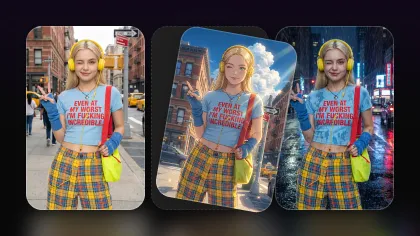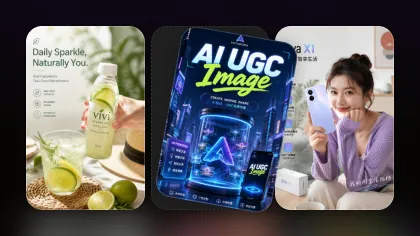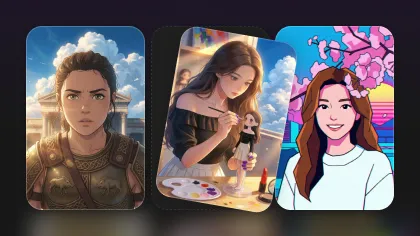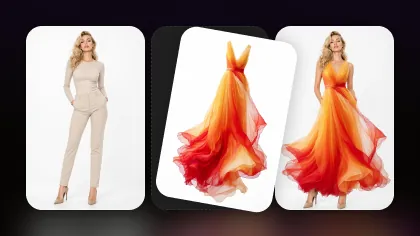
AI image generation in 2026 is no longer about finding one magical model that does everything. That era is over.
The real advantage now comes from knowing which model fits which task. Some models are better for polished realism. Some are stronger for text-heavy visuals. Some are faster for early exploration. Others are more useful when you start from reference images and need consistency across revisions.
That is why Flyne AI Image Generator is useful for creators. Instead of forcing you to commit to a single model style, Flyne AI works as a practical image-generation hub where you can test different models, compare results, upload references, optimize prompts, and build a repeatable workflow for real content production.
This guide is written for creators, marketers, designers, and small teams who need usable final images, not just impressive demos. By the end, you will know how Flyne AI Image Generator works, how the major model options differ, which model to use for common creative goals, and how to build a faster image workflow without wasting time or credits.
What Is Flyne AI Image Generator?
Flyne AI Image Generator is a multi-model AI image creation tool built for text-to-image and image-guided generation. It gives creators a single place to test different visual styles, generate from prompts, upload reference images, adjust aspect ratios, optimize prompts, and refine outputs without constantly switching platforms.
Inside Flyne AI, you can use image workflows for:
- Text-to-image creation
- Image-to-image transformation
- Product visuals
- Social media graphics
- Poster and thumbnail drafts
- Character concepts
- AI typography and text-heavy visuals
- Reference-based image generation
- Final upscaling and polishing
The key idea is simple: you learn one workflow, then choose the model that best fits the job.
That matters because AI image models do not behave the same way. A model that is excellent for photoreal product visuals may not be the best choice for fast concept art. A model that is great for prompt exploration may not be the strongest option for readable poster text. A model that can create beautiful images may still struggle when you need strict composition or reference consistency.
Flyne AI’s advantage is that it helps you treat model choice as part of the creative process.
The Model Lineup at a Glance
Flyne AI includes several useful model and tool paths for image creation. The exact menu may continue to change as new models are added, but the current creator workflow can be understood through these major options:
- Nano Banana Pro — best overall choice for high-quality generation, editing, semantic control, and publish-ready assets.
- Nano Banana AI — useful for fast image editing, quick drafts, and practical creator workflows.
- Seedream 4.5 — strong for expressive images, polished aesthetics, and stylized creative work.
- Seedream 5.0 — useful for newer creative image generation and image-guided visual work.
- GLM Image AI — best for text-heavy visuals, structured images, semantic accuracy, and information-rich layouts.
- Image to Image AI — a direct workflow for transforming an existing image using advanced image models.
- AI Product Photography — a practical option for commercial product visuals.
- AI Image Upscaler — useful for final enhancement before publishing.
Some model names from the broader AI image ecosystem, such as FLUX.1, FLUX.2, or FLUX Kontext, may still appear in context when discussing model families or older comparisons. In this Flyne AI version, the platform framing should be understood as Flyne AI, while model names are preserved only when they refer to actual model families.
Model Ranking: Which One Should You Actually Use?
The best model depends on the task, but most creators need a default starting point. Here is a practical ranking based on everyday usefulness.
| Rank | Model or Tool | Best For | Why It Matters |
|---|---|---|---|
| 1 | Nano Banana Pro | Best overall creator workflow | Strong balance of quality, editing, semantic control, and practical polish |
| 2 | GLM Image AI | Text-heavy visuals and structured layouts | Better fit for posters, diagrams, labeled graphics, and information-rich designs |
| 3 | Seedream 5.0 | Modern creative image generation | Useful for polished visual exploration and image-guided creative work |
| 4 | Seedream 4.5 | Stylized art and expressive concepts | Good for cinematic, artistic, and illustration-friendly outputs |
| 5 | Nano Banana AI | Fast drafts and practical edits | Good for quick experiments before moving into a more polished model |
| 6 | Image to Image AI | Reference-based transformation | Best when you already have a source image and want to reshape it |
| 7 | AI Product Photography | Product visuals | Useful for e-commerce, ads, and product mockups |
| 8 | AI Image Upscaler | Final enhancement | Best at the end of the workflow, not the beginning |
Editor’s takeaway: if you are unsure where to start, start with Nano Banana Pro for general creator work. Move to GLM Image AI when the design depends on text, labels, or layout. Use Seedream when style and visual mood matter more than strict structure.
Quality, Speed, Consistency, and Cost: The Real Trade-Offs
Every AI image model sits inside a practical trade-off triangle: quality, speed, and cost efficiency. A fourth factor matters just as much for production work: consistency.
A model can look beautiful but be difficult to control. Another model can be fast but weak for final assets. A third can be excellent with references but unnecessary for pure text-to-image ideation.
Use this matrix as a quick mental map.
| Model or Tool | Image Quality | Prompt Accuracy | Consistency | Speed | Best Workflow Role |
|---|---|---|---|---|---|
| Nano Banana Pro | 5 | 5 | 4 | 4 | Default high-quality generation and editing |
| GLM Image AI | 4 | 5 | 4 | 3 | Structured visuals, text rendering, diagrams |
| Seedream 5.0 | 5 | 4 | 4 | 4 | Polished creative visuals and image-guided work |
| Seedream 4.5 | 4 | 4 | 3 | 4 | Stylized art, moodboards, visual concepts |
| Nano Banana AI | 4 | 4 | 3 | 5 | Fast drafts and quick edits |
| Image to Image AI | 4 | 4 | 4 | 4 | Transforming existing images |
| AI Product Photography | 4 | 4 | 4 | 4 | Product content and commercial visuals |
How to read this table:
- Use quality when you care about final polish.
- Use prompt accuracy when your concept has many instructions.
- Use consistency when you work from references or need repeatable outputs.
- Use speed when you need ideas quickly.
- Use workflow role to avoid wasting credits on the wrong model stage.
When to Use Each Model
Best Overall: Nano Banana Pro
Nano Banana Pro is the safest default for most creator and marketing workflows. It is strong enough for polished image generation, flexible enough for edits, and practical enough for social content, thumbnails, product visuals, and campaign drafts.
Use it when you need:
- A final image that looks clean and publish-ready
- A strong balance of realism and creative control
- Image editing through natural-language instructions
- Product or lifestyle images
- Variations of one concept
- A practical everyday image model
Nano Banana Pro is especially useful when your workflow is not one-shot generation. If you like generating a draft, selecting the best direction, and then revising it, this is the model to start with.
Best for Text-Heavy Layouts: GLM Image AI
GLM Image AI is the best choice when your image contains structured information. It is designed for semantic understanding, textual rendering accuracy, and stable layout structure, which makes it useful for posters, labeled visuals, tutorial diagrams, and infographic-like assets.
Use it when you need:
- Posters with titles and subtitles
- Instructional visuals
- Diagram-style graphics
- Product explanation layouts
- Information-rich social posts
- Clean hierarchy across multiple text blocks
The prompt should be clear and structured. Short exact text usually works better than long paragraphs. Think in terms of sections, labels, spacing, hierarchy, and readability.
Best for Stylized Creative Exploration: Seedream 4.5
Seedream 4.5 is a strong option when your priority is visual mood, illustration, cinematic style, or expressive creative direction.
Use it when you need:
- Concept art
- Stylized character images
- Moodboards
- Visual direction tests
- Cinematic social visuals
- Illustration-friendly outputs
It is especially useful early in a project when you are still deciding what the visual world should feel like.
Best for Newer Image-Guided Creation: Seedream 5.0
Seedream 5.0 is useful when you want a newer image-generation path with strong creative flexibility. It can fit workflows where you test polished still images, use image references, and create visual concepts that may later become ads, social posts, or video starting frames.
Use it when you need:
- Fresh creative directions
- Polished image concepts
- Reference-driven exploration
- Alternative outputs beside Nano Banana Pro
- Visual assets for campaign planning
Best for Fast Drafts: Nano Banana AI
Nano Banana AI is a good choice when you want quick experiments and practical edits. Use it before moving into a more refined workflow.
Use it when you need:
- Early concept drafts
- Quick image testing
- Fast visual variations
- Simple creative edits
- Lower-friction experimentation
For many workflows, the best path is to draft quickly with Nano Banana AI, then finish with Nano Banana Pro.
Best for Existing Images: Image to Image AI
Image to Image AI is the right entry point when you already have an image. Instead of starting from a blank prompt, upload a reference photo, sketch, product shot, or design draft and transform it with text instructions.
Use it when you need:
- Style transfer
- Background transformation
- Product scene changes
- Sketch-to-polished-image workflows
- Character or object preservation
- Reference-based visual updates
This is one of the most important workflows for creators because real projects often begin with existing assets.
Simple Decision Guide
| Your Goal | Recommended Starting Point |
|---|---|
| Best all-around results | Nano Banana Pro |
| Text-heavy posters and diagrams | GLM Image AI |
| Stylized art and cinematic visuals | Seedream 4.5 |
| Newer creative image generation | Seedream 5.0 |
| Fast drafts and quick edits | Nano Banana AI |
| Transform an existing image | Image to Image AI |
| Product photos and e-commerce visuals | AI Product Photography |
| Final output enhancement | AI Image Upscaler |
Print this mentally: Nano Banana Pro for default polish, GLM Image AI for structured text, Seedream for style, Image to Image AI for references.
How to Use Flyne AI Image Generator Step by Step
Step 1: Open the Image Generator
Start with Flyne AI Image Generator when you want a general place to create and compare AI images.
This is the best entry point if you are not sure which model you need yet.
Step 2: Choose the Right Model
Do not choose a model randomly. Match the model to the task.
- For general creator work, choose Nano Banana Pro.
- For poster layouts and text-heavy visuals, choose GLM Image AI.
- For stylized art and concept exploration, choose Seedream 4.5 or Seedream 5.0.
- For fast early drafts, choose Nano Banana AI.
- For existing images, use Image to Image AI.
Step 3: Upload a Reference Image When Needed
Upload a reference image when your result must preserve something specific, such as:
- Product shape
- Character identity
- Clothing style
- Camera angle
- Brand mood
- Object placement
- Original composition
Reference images are especially useful for product marketing, character workflows, and before/after creative transformations.
Step 4: Write a Clear Prompt
A strong prompt usually includes five parts:
- Subject: what the image is about.
- Context: where the subject appears.
- Style: photorealistic, editorial, cinematic, minimal, illustration, 3D, etc.
- Composition: close-up, centered, left-aligned, top-down, portrait, landscape.
- Constraints: no text, clean background, readable title, soft lighting, accurate product shape.
Example prompt:
Create a clean product advertising image for a premium ceramic coffee mug on a warm kitchen counter. Soft morning light, realistic shadows, minimal background, shallow depth of field, editorial product photography style, no readable text.
For GLM Image AI, use a more structured prompt:
Create a modern infographic poster about sustainable coffee habits. Layout: large top title, center illustration of a coffee cup, three labeled benefit cards below. Exact text: “Drink Better Coffee”, “Reuse”, “Save Water”, “Buy Local”. Clean grid, readable typography, high contrast, generous spacing.
Step 5: Choose Ratio and Resolution
Match the output format to the final use case.
- 1:1 for square social posts and profile content
- 4:5 for Instagram-style portrait posts
- 9:16 for vertical mobile content
- 16:9 for thumbnails, banners, and video starting frames
- Landscape for blog headers and website hero images
Do not upscale everything. Generate several drafts first, then upscale only the strongest final output.
Step 6: Generate, Compare, and Iterate
A professional workflow is rarely one prompt and done. Use a three-pass process:
- Draft pass: test composition and overall concept.
- Control pass: fix structure, lighting, subject accuracy, and style.
- Polish pass: upscale, clean details, and prepare the asset for publishing.
This saves credits because you are not trying to make every early draft perfect.
Real-World Creator Workflows
E-Commerce Product Marketing
Use AI Product Photography when you need clean commercial visuals. Use Nano Banana Pro for lifestyle variants and final ad images.
Suggested workflow:
- Upload the product image.
- Generate a clean studio version.
- Create two lifestyle backgrounds.
- Choose the strongest result.
- Upscale the final image.
Social Media Content at Scale
Use Nano Banana AI or Nano Banana Pro depending on quality needs.
Suggested workflow:
- Draft 5–10 variations quickly.
- Pick the strongest two.
- Adjust copy space, background, and lighting.
- Export in vertical and square formats.
- Save the best prompt as a reusable template.
Posters, Thumbnails, and Designed Visuals
Use GLM Image AI when readable text and layout matter. Use Nano Banana Pro when the design needs final polish.
Suggested workflow:
- Draft the layout with GLM Image AI.
- Keep text short and exact.
- Revise the visual style with Nano Banana Pro or Image to Image AI.
- Upscale the finished asset.
Character Design and OC Creation
Use Seedream 4.5 or Seedream 5.0 for visual exploration, then use Nano Banana Pro for polished variants.
Suggested workflow:
- Generate a character direction.
- Lock core traits: face, outfit, hair, silhouette.
- Generate mood and pose variations.
- Avoid changing too many identity details at once.
- Save successful prompts for later consistency.
Blog Headers and Website Hero Images
Use Nano Banana Pro for polished hero images and Seedream for more stylized editorial concepts.
Suggested workflow:
- Generate a wide 16:9 concept.
- Leave negative space for title overlays.
- Avoid readable text inside the image unless needed.
- Upscale the final image.
- Add article text separately in your design tool for better control.
Why Flyne AI Works as a Creator Hub
Flyne AI is useful because it supports a platform mindset rather than a one-model mindset.
That matters in 2026 because model rankings change quickly. A model that is best for text today may be challenged by another model tomorrow. A model that dominates photorealism may not be your best option for product mockups or reference edits.
A hub workflow solves this problem. Instead of rebuilding your process every time a new model appears, you keep the same creation habits and switch models based on the task.
Flyne AI gives creators a practical way to do that:
- One site for image, video, and music tools
- Dedicated model pages for specific workflows
- A general image generator for broader testing
- Image-to-image editing for existing assets
- Product and background tools for marketing content
- Upscaling tools for final output preparation
- Pricing options for production planning
For creators, that is more useful than chasing a single model name.
Final Recommendation
If you are starting today, use this model map:
- Default choice: Nano Banana Pro
- Text-heavy visuals: GLM Image AI
- Stylized art: Seedream 4.5
- Modern creative exploration: Seedream 5.0
- Fast drafts: Nano Banana AI
- Existing image transformation: Image to Image AI
- Product visuals: AI Product Photography
- Final polish: AI Image Upscaler
The best AI image workflow is not about proving one model is always superior. It is about choosing the right model for the current job, using fast drafts before final polish, and saving credits for the assets that are actually worth publishing.
That is the practical value of Flyne AI Image Generator: it turns model choice into a repeatable creative system.
Recommended Tools
- Flyne AI Image Generator — the best starting point for testing models and generating images from text or references.
- Nano Banana Pro — the strongest default choice for polished creator images, editing, and publish-ready outputs.
- Nano Banana AI — useful for fast drafts, quick edits, and early creative exploration.
- GLM Image AI — best for text-heavy visuals, structured layouts, posters, and information-first graphics.
- Seedream 4.5 — useful for stylized art, expressive visuals, and cinematic creative directions.
- Seedream 5.0 — useful for newer image generation workflows and polished visual exploration.
- Image to Image AI — the right tool when your workflow begins with an existing image.
- AI Product Photography — practical for commercial product visuals, mockups, and e-commerce assets.
- AI Image Upscaler — useful for enhancing final images before publishing.
Related Articles
- Creating 4K High-Quality Images with Nano Banana Pro AI: A Practical Editor’s Guide
- What Is Nano Banana 2 and How Does It Work?
- Seedream 4.5 vs Nano Banana Pro: Which AI Visual Tool Actually Fits Your Creative Workflow?
- GPT Image 2 Explained: What’s New, and How It Compares With Nano Banana Pro
- Krea AI Review: Which AI Image Model Fits Your Creative Workflow?
People Also Read
- Nano Banana Pro on DreamMachine AI: A Practical Way to Create Better AI Images
- Nano Banana 2 vs Nano Banana Pro: What Changed and Which One Fits Your Workflow?
- HeyDream AI Image Generator Guide: Best Models for Text-to-Image and Image-to-Image
- Nano Banana 2 vs Qwen Image 2.0 vs Seedream 5.0: Which HeyDream Model Fits Your Workflow?
- How to Use Sea Imagine AI’s Image Generator: A Beginner-Friendly Tutorial